
Judgment as an Anesthetic – Where Does The Opinion of Others End, And Your Peace Begin?
A visit to Malta in the early summer can remind us that peace is not a luxury, but a fundamental need of the neurological system. When we step outside a culture that constantly seeks faults and imposes guilt, we gain a unique opportunity to recognize just how heavily our own cultural baggage weighs us down.
The "geography of the mind" is a concept signifying that our inner peace, mental framework, and level of freedom does not depend on physical coordinates on a map, but on the internal cultural and psychological space in which we choose to live. This is a space where we define our own boundaries, deciding whether to carry a "geography" of anxiety and perpetual wariness of others' judgment, or to consciously step into a "geography" of expansiveness, personal autonomy, and inner peace, where the gaze of others loses its power to define us. It is, in essence, the realization that freedom is not a place you travel to, but a state of mind you choose to maintain. Yet, some societies facilitate this freedom, while others make it inherently harder. Surprisingly, a society can function, and function beautifully, without collective pressure and constant surveillance. Paradoxically, it is from this very peace that true creativity and the authentic strength of an individual are born - someone who no longer wastes energy defending themselves against the eyes of others, but can direct it toward their own creation, or simply, pure existence.
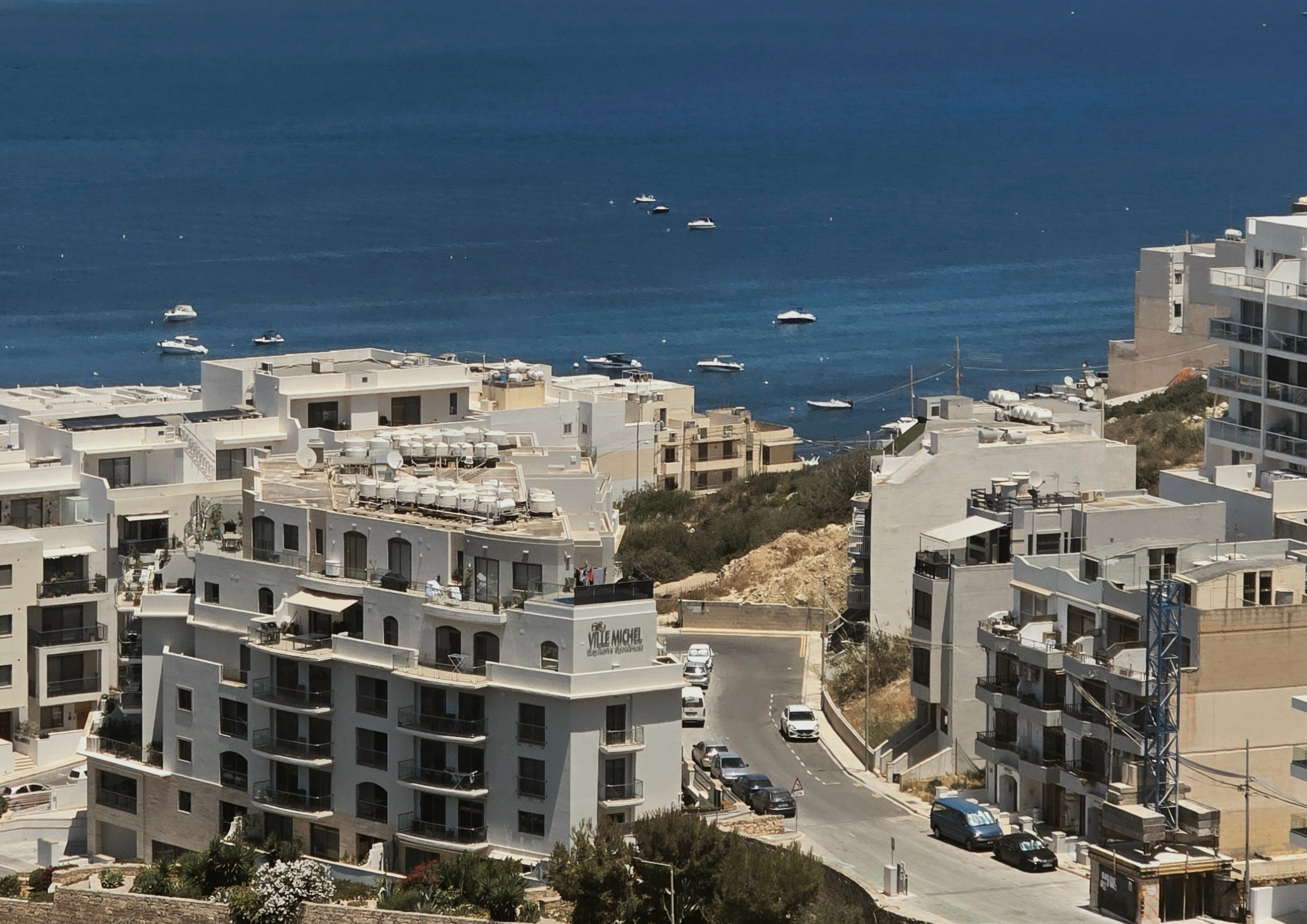
In Malta, the June light is sharp. The air smells of salt, and the walls of Valletta stand as witnesses to centuries of shifting civilizations. Malta feels like a stone ship anchored in the middle of the Mediterranean, an open-air museum sculpted from sun and limestone. On this island, history does not sit in books; it literally slips beneath your feet as you walk the streets that remember the Phoenicians, the Knights, and early Christians. Malta possesses a distinct, theatrical aesthetic. It is a place where a raw, wind-swept limestone landscape meets the elegance of the Mediterranean lifestyle, creating an atmosphere that is simultaneously monumental and soothing. The Maltese are an anthropological anomaly, a fascinating amalgam proving that an exceptionally warm society and a deep, authentic peace can be born from the harshest historical crossroads. To understand the Maltese, you must understand that the history of the entire Mediterranean flows through their veins. Situated on a rock between Europe and Africa, they have been conquered, defended, colonized, and assimilated through the centuries. They emerged from the genetic and cultural code of the ancient Phoenicians, who laid the foundation upon which Arabic influences, Sicilian and Italian aesthetics, French refinement, and ultimately, British pragmatism and order were overlaid. The ultimate proof of this incredible synthesis is their language. It is the only Semitic language in the world written in the Latin alphabet, where you will recognize Arabic grammar and root words, yet seasoned with Italian and English expressions. When you listen to the Maltese speak, you hear the secret history of the world: the melody is Italian, the words are Arabic, and the structure is British. They refused to let history break them. They took the best from every conqueror and forged their own indestructible identity.
To continue reading, please log in or activate your subscription.