
The Prince of Light and Shadow – Stefan Miloš on Architecture That Shapes Life and Remembers Time
Quick-witted and almost theatrically present, Stefan Miloš, a Belgrade-based architect and tireless traveller, speaks of architecture as an experience that does not end on the drawing board, but begins in the way space captures our attention. For him, architecture is never merely function or form; above all, it is a relationship, a subtle equilibrium between the light that enters, the materials that receive it, and the energy that inhabits the space between them. His sensibility reveals itself in a devotion to natural, earthy tones and materials that age gracefully: stone that remembers time, wood that shifts colour under the hand of light, concrete that does not hide its pores. Travel has become for Stefan a form of education no school could offer. Moving through different cities and cultures has brought him to a question central to architecture: how societies conceive the spaces they inhabit together. Homes, streets, squares, places of gathering, of noise and of silence – each carries the imprint of a culture, of a way of understanding community. It is precisely in these differences – in approaches to public space, ways of living, how light enters a home, or how a city opens to the landscape – that Stefan Miloš finds the questions that keep architecture alive. Equally at ease behind the camera as in the studio, he masters the moment, the light, and the space.
In Belgrade, celebrating the arrival of spring, the conversation for TLA Journal turns to materials and the quiet of space, as well as how different cultures understand living environments, what truly makes a city alive, and the ways in which architecture can shape everyday life.
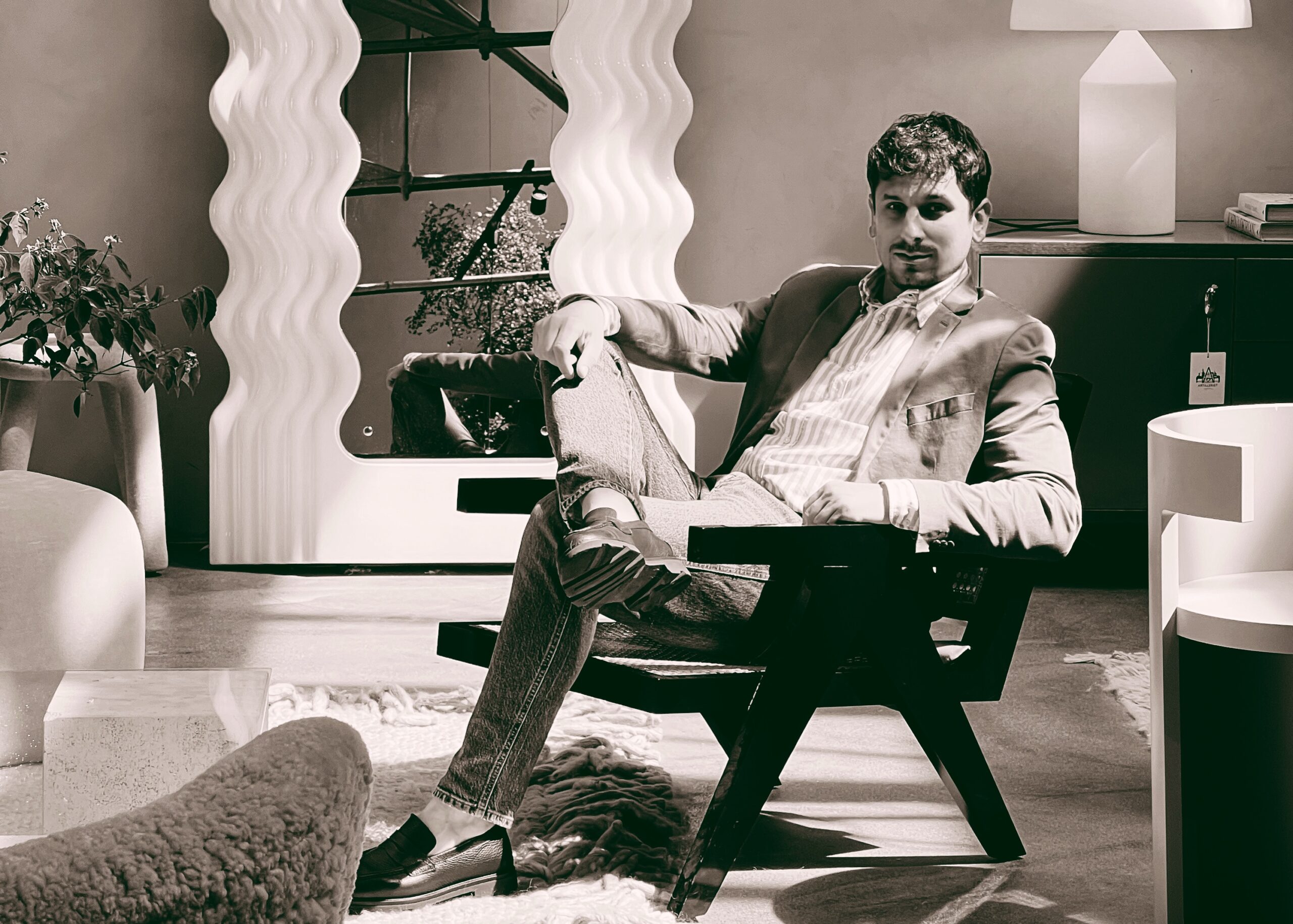
What do we actually mean by “the culture of living,” and how does this concept change from one society to another, based on the places you’ve experienced in your travels?
The culture of living is something you won’t easily find in books, and even less often questioned – which may explain why so many spaces today feel the same. It reveals itself in the small gestures of everyday life: whether someone sits on the doorstep or behind a high wall, whether conversations take place in the street or in the courtyard, whether windows open onto the city or shield it away. Travel has shown me just how varied these relationships are, and how each space carries its own logic of life. In Morocco, for example, houses are almost entirely closed from the outside. Walls protect from both heat and prying eyes, yet once you step inside, an entirely different world unfolds: courtyards filled with greenery, water cooling the air, shade, and silence. Life turns inward, focused on a space that is both a private refuge and a miniature universe. In much of Southeast Asia, the dynamic is almost the opposite. The street extends the home. Food is cooked outdoors, chairs spill onto the pavement, conversations take place between house and city. Boundaries between private and public are fluid, and the city is constantly part of everyday life. In parts of Africa, space takes yet another dimension. Life often moves between home, courtyard, and street without clear boundaries. Architecture is flexible, but daily life is intensely lived. Europe presents its own contrasts. Western Europe has developed a strong culture of public space and urban order, while in the East, the relationship to the city is often more spontaneous, sometimes even chaotic. All of these are authentic models, but none is universal. What fascinates me as an architect is the exchange of these ideas. The collective energy I see in Asia, the intimacy of space in the Middle East, the urban discipline of Western Europe, the immediacy of life in Africa – all are concepts that architecture can translate into contemporary living spaces. Cities have always emerged from such encounters, because architecture is never an isolated act. It is always a dialogue between different spatial cultures.
To continue reading, please log in or activate your subscription.